Preparing Your Tuscaloosa Trees for Tornado Season: A Homeowner’s Guide
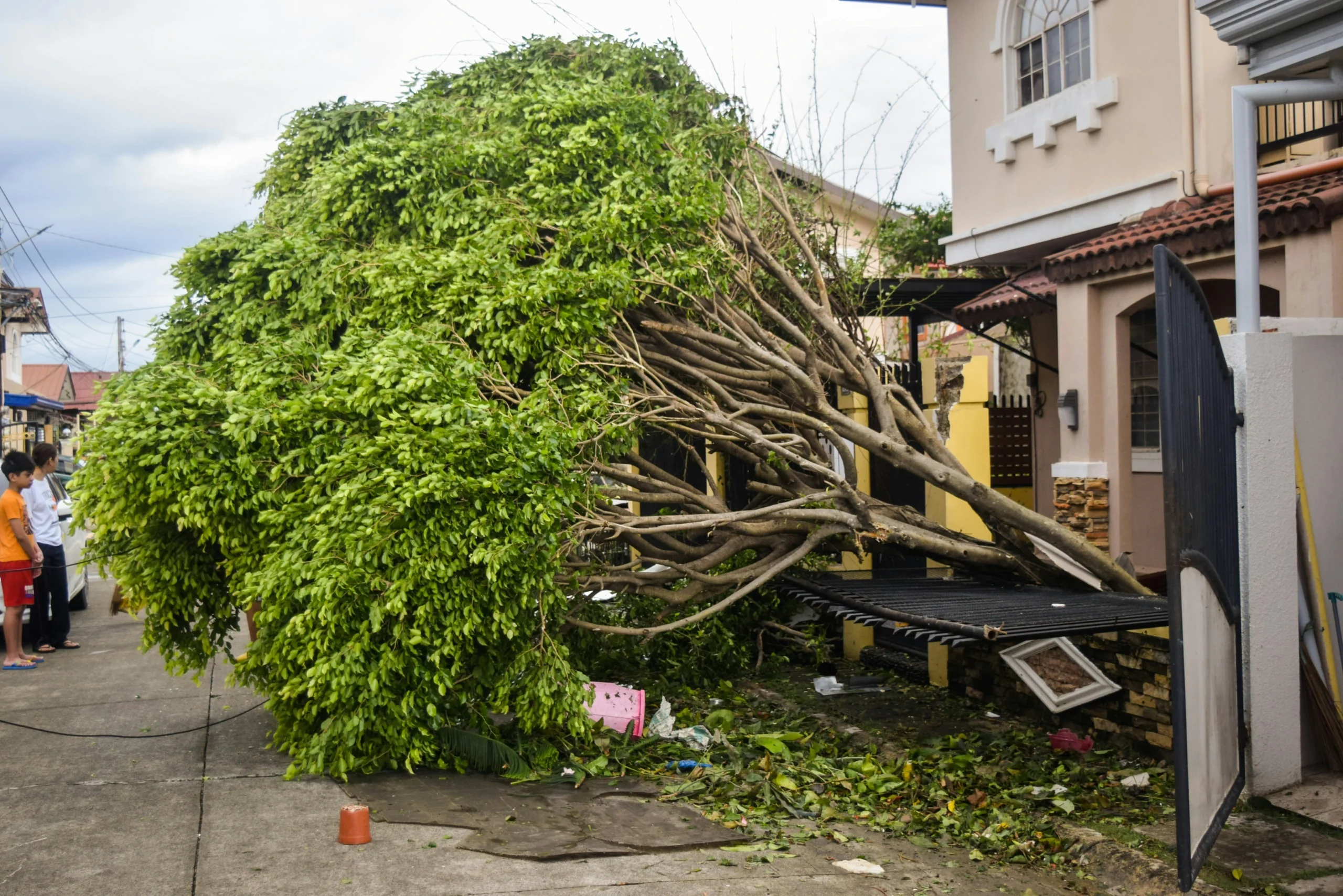
Living in Tuscaloosa means facing the reality of tornado season. Preparing Tuscaloosa trees for tornado season is essential to prevent damage and keep your property safe. April 27, 2011, reminded us that even the most beautiful trees can become deadly hazards during severe weather. As spring storm season approaches, now is the time to assess your trees and take preventive action that could protect your home—and possibly your life.
Why February and March Matter
The best time to prepare your trees for tornado season is before the storms arrive. February through early March gives you a critical window to identify hazards, complete necessary pruning, and address structural weaknesses while trees are dormant and before severe weather hits.
The 5 Warning Signs Your Tree Won’t Survive the Next Storm
1. Severe Lean Toward Structures
If your tree is leaning more than 15 degrees toward your home, garage, or power lines, it’s already under stress. Tornadoes and straight-line winds will exploit this weakness. During our pre-storm assessments, we use inclinometers to measure lean precisely—even a 10-degree lean can be dangerous for large trees. What to do: Have a certified arborist assess immediately. Trees with severe lean often need removal, though some can be stabilized with cabling systems if caught early.
2. Dead or Dying Canopy
More than 50% canopy death means your tree is in serious decline. Dead branches become “widow makers” during storms—they break off unpredictably and can pierce roofs, crush vehicles, or injure people. We see this frequently in Tuscaloosa’s aging water oaks and storm-damaged pines. What to do: If more than half the canopy is dead, removal is usually safer than treatment. For trees with 25-50% dieback, aggressive pruning and health treatments may save them.
3. Cracks or Splits in the Trunk
Major trunk cracks—especially those running vertically or extending more than halfway through the trunk—indicate structural failure is imminent. We’ve responded to dozens of emergencies where cracked trunks finally gave way during storms. What to do: Emergency removal is often necessary. Some split trunks can be stabilized with bracing systems, but only if the tree is otherwise healthy and the crack is recent.
4. Root Damage or Upheaval
If you can see roots lifting from the ground, if the tree rocks when you push it, or if there’s visible root decay, your tree’s foundation is compromised. Saturated soil from spring rains makes this exponentially worse—trees literally topple because roots can’t grip wet clay. What to do: This requires immediate professional assessment. Root damage is often invisible until it’s too late, which is why annual inspections matter.
5. Fungal Growth at the Base
Mushrooms or shelf fungi growing at the trunk base indicate internal decay—your tree is literally rotting from the inside. These trees look healthy from the outside, but have hollow cores that can’t withstand wind stress. What to do: Have an arborist perform a sonic tomography test to measure internal decay. Many of these trees need removal before storm season.
Storm-Proofing Pruning: What Actually Works
Not all pruning helps prevent storm damage. In fact, improper pruning can make trees more vulnerable. Here’s what actually works:
Crown Thinning (The Most Important)
Selective removal of branches reduces wind resistance—essentially creating “holes” in the canopy that let wind pass through rather than catching it like a sail. This is critical for Tuscaloosa’s tall pines and broad-canopied oaks. We typically remove 15-25% of the canopy during thinning, focusing on:
- Crossing branches that rub and create weak points
- dense interior growth that catches the wind
- Branches growing at narrow angles (less than 45 degrees).
Crown thinning can reduce wind load by 30-40%, dramatically decreasing the chance your tree will topple.
Deadwood Removal
Every dead branch is a projectile waiting to happen. During the April 27 tornado, we responded to dozens of homes where dead limbs had punched through roofs, even though the trees themselves survived. Professional deadwood removal identifies and eliminates:
- Obviously dead branches (no leaves, brittle wood)
- hanging broken branches from previous storms
- branches with visible decay or insect damage
What NOT to Do: Lion’s Tailing
Some unlicensed “tree guys” practice “lion’s tailing”—stripping all interior branches and leaving only foliage at branch ends. This is terrible for trees and actually increases storm damage risk by moving all weight to branch tips, removing the tree’s natural wind-dampening, and creating weak, whippy branches that break easily. If someone suggests this, find a different arborist.
The Bradford Pear Problem
Bradford pears are beautiful—and incredibly dangerous. Nearly every Bradford pear in Tuscaloosa has weak branch unions that split during storms. We remove dozens of these every year after they’ve split and damaged homes. If you have Bradford pears, consider: Preventive removal before they split (typically $400-800), Cabling systems to support weak unions ($400-600) Replacement with safer ornamental trees. The question isn’t if your Bradford pear will split—it’s when and what it will hit when it does.
Your Pre-Season Action Plan
6-8 Weeks Before Storm Season (February-March): ✓ Schedule a professional tree assessment ($100-150, often waived with work) ✓ Identify hazardous trees and prioritize removal/treatment ✓ Complete major pruning while trees are dormant ✓ Install cabling/bracing systems for valuable trees ✓ Remove dead trees that threaten structures 4-6 Weeks Before Storm Season (March-April): ✓ Finish all removal and pruning projects ✓ Clear debris from previous years ✓ Document tree conditions for insurance (photos from multiple angles) ✓ Identify safe zones in your home away from large trees During Storm Season (April-September): ✓ Monitor weather forecasts closely ✓ After storms, don’t approach damaged trees yourself ✓ Call professionals for emergency assessment ✓ Keep our emergency number saved: (205) XXX-XXXX
What Emergency Response Really Looks Like
When severe weather hits, our phones light up. Here’s what happens when you call our emergency line: Immediate Phone Assessment (2-5 minutes): We ask critical questions to determine urgency and safety. Is the tree on your house? Is anyone injured? Are power lines involved? This helps us triage calls and dispatch appropriately. Crew Dispatch (30-90 minutes): For life-safety situations—trees on occupied homes, blocking emergency access, or involving injuries—we dispatch immediately. Our on-call crews are equipped with emergency gear and can respond from home. Scene Safety Evaluation: Before we touch anything, we assess: Are there energized power lines? Is the tree stable or still moving? Are there additional failure risks? Safety always comes first—for you and our crews. Stabilization and Removal: Using crane trucks, rigging equipment, and sometimes coordination with Alabama Power, we stabilize the immediate threat, then systematically remove the tree once it’s safe. During major events (tornadoes, widespread storms), response times extend because we’re serving dozens of families. We prioritize based on life safety, not who called first.
The Real Cost of Waiting
Scenario 1: Preventive pruning – $600 investment in February. Scenario 2: Emergency removal after the tree falls on your roof – $2,400 removal + $8,000-15,000 roof repair + insurance deductible + displaced family. We’ve seen this exact scenario play out dozens of times. The $600 pruning job that homeowners postponed because “the tree looks fine” becomes a $20,000+ disaster when the storm hits.
Take Action Now
Don’t wait until you’re Googling “emergency tree removal Tuscaloosa” at 3 AM during a storm. The time to protect your home is now, while trees are dormant and before severe weather arrives. Call us today for a free pre-storm assessment: (205) XXX-XXXX We’ll walk your property, identify hazards, and provide honest recommendations. If your trees are fine, we’ll tell you. If they’re dangerous, we’ll explain exactly why and what it will take to make your property safe. Storm season is coming. Be ready.
Need help preparing your trees before storm season?
Call (205) XXX-XXXX today for a professional tree safety assessment in Tuscaloosa.